
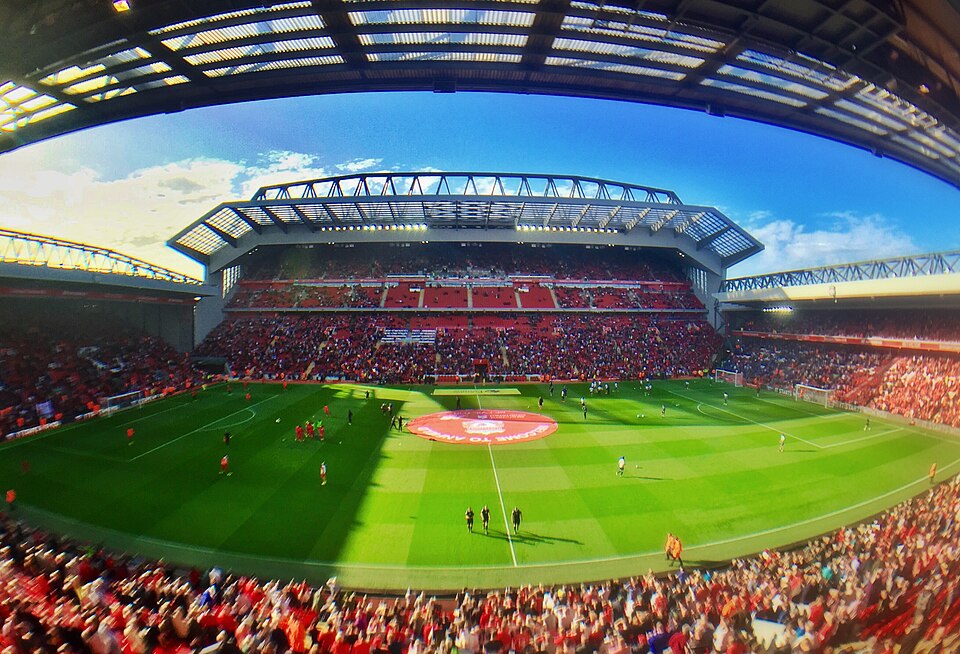
Some football stadiums are worth visiting because of their history. Others earn the trip because of their atmosphere, architecture, or the city that surrounds them. The best ones combine all four. If you are planning a football pilgrimage in 2026 — whether to catch a single match or spend a summer groundhopping across the continent — these are the stadiums that should sit at the top of your list. For fans building their European football stadium bucket list, every ground on this list delivers an experience that justifies the journey.
Old Trafford, Manchester — The Theatre of Dreams
England’s largest club stadium holds 74,310 and carries the weight of Manchester United’s entire history in its red-brick exterior. The Stretford End provides the noise. The Munich Tunnel and clock serve as permanent memorials to the 1958 air disaster. The Sir Alex Ferguson Stand looms over the pitch like a monument. Old Trafford is not the most modern ground in England — parts of it feel their age — but that is part of the appeal. This is a cathedral, not a showroom. Visit for a European night or a rivalry match against Liverpool or Manchester City. Join the official membership scheme (£30) for access to general sale tickets.
Celtic Park, Glasgow — The British Atmosphere Benchmark
Celtic Park on a Champions League night has been described by players — Lionel Messi among them — as the loudest atmosphere they have ever experienced. The 60,000-capacity ground in Glasgow’s East End is not architecturally unique. It does not have a retractable pitch or a Michelin-starred restaurant. What it has is 60,000 people who treat every European match like a cup final, a standing section behind one goal that never stops, and a rendition of “You’ll Never Walk Alone” that rivals Anfield’s in volume if not in fame. Tickets for league matches are easier to come by than Old Firm derbies. The stadium tour costs £15 and includes access to the boardroom, the dressing rooms, and the tunnel walk.
San Siro, Milan — Two Clubs, One Landmark
The Giuseppe Meazza Stadium — universally known as the San Siro — is the only ground in Europe that hosts two clubs with seven European Cups between them. AC Milan and Inter share the 75,000-capacity bowl, and the visual of the red-and-black Curva Sud facing the blue-and-black Curva Nord on derby day is one of football’s iconic images. The stadium itself is aging — both clubs plan to move into separate new venues — but that only makes a visit more urgent. The spiral towers on the exterior are architectural landmarks in their own right. See it while you still can.
Signal Iduna Park, Dortmund — The Yellow Wall
The Südtribüne at Borussia Dortmund’s home holds 25,000 standing supporters — the largest terrace in European football. When the Yellow Wall is in full voice, the noise is physical. You feel it in your chest. The stadium tour takes you to the top of the wall, through the players’ tunnel, and into a museum that tells the story of a club built on working-class identity and the most passionate matchday culture in Germany. Bundesliga tickets are among the most affordable in major European football, and Dortmund’s location in the Ruhr Valley makes it an easy stop on any central European itinerary.
La Bombonera, Buenos Aires — The Stadium That Moves
It is not in Europe, but no list of stadiums worth visiting can exclude Boca Juniors’ home. La Bombonera — officially Estadio Alberto J. Armand — seats 49,000 in a vertical bowl so steep that the upper tiers feel directly above the pitch. The stadium literally vibrates when the crowd jumps in unison, a structural quirk that adds a physical dimension to the atmosphere that no other ground can replicate. A Superclásico against River Plate is the ultimate prize, but even a routine league match in La Boca delivers an experience that stays with you for years. Buenos Aires is a long flight from most places, but the payoff is a stadium that makes every other ground on this list feel slightly tame.
Practical Tips for the Traveling Fan
Book stadium tours weeks in advance — weekend slots at Anfield, Camp Nou, and the Bernabéu sell out quickly. Join club membership schemes for ticket access, especially in England where general sale tickets for big clubs are rare. Group-stage Champions League matches (September to December) offer the best chance of combining a European night with accessible tickets. And do not overlook the smaller grounds: De Kuip in Rotterdam, the Marakana in Belgrade, and Celtic Park in Glasgow prove that atmosphere is not proportional to budget.
Sources: Footbeen.com “15 football stadiums in Europe every fan should visit (2026 bucket list)” (July 2026); European Football Travel “Top 10 Most Epic Football Stadium Experiences In Europe 2026” (2026); SportsRender.com “Top 20 Best European Football Stadiums Ranked for 2026/27” (July 2026).