
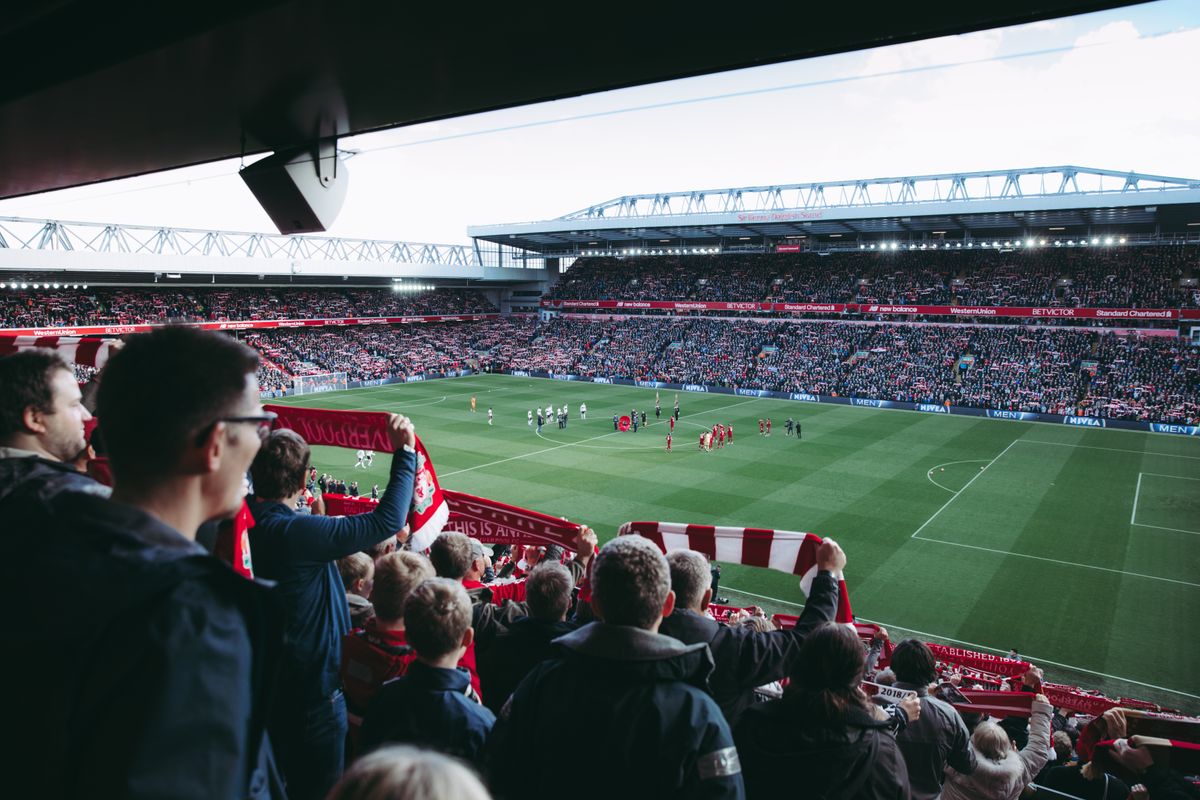
The football scarf is the most democratic symbol in sport — a strip of fabric that costs a few pounds to produce, can be purchased by any supporter regardless of income, and communicates allegiance more effectively than any replica shirt or branded merchandise. The scarf has been intertwined with football culture for over a century, surviving every commercial revolution the sport has undergone and emerging — improbably — as the one piece of supporter paraphernalia that has retained its authenticity through the Premier League era, the Bosman ruling, and the age of the global super-club. Here is how a simple woolen accessory became the universal language of football support.
The Origins: Wool, Winter, and the Working Class
The football scarf emerged in the early 20th century as a practical garment before it became a symbolic one. British football grounds at the turn of the century were open-air terraces exposed to the full force of the English winter — rain, wind, and temperatures that regularly dropped below freezing between November and February. Supporters wore scarves to keep warm, and the scarves were typically club-colored because the textile traditions of the industrial towns where football flourished — Manchester’s cotton mills, Yorkshire’s woolen industry, Lancashire’s textile factories — meant that producing a simple striped scarf in the colors of the local team was both affordable and available. The scarf was practical first, decorative second, and the transition from the former to the latter happened gradually over decades. By the 1960s and 1970s, the scarf had become a conscious symbol of allegiance — worn not just for warmth but for identity, held aloft during renditions of “You’ll Never Walk Alone” at Anfield, tied around wrists at away matches, and displayed as a banner that required no words to communicate its message.
The Scarf as a Ritual Object
The football scarf performs a function that no other piece of supporter merchandise replicates: it is a ritual object, deployed at specific moments in the matchday experience to create a visual effect that transforms the atmosphere of the stadium. The raised scarf — held above the head during the singing of a club anthem — is one of the most powerful images in sport, a sea of color that communicates unity, passion, and collective identity more effectively than any choreographed tifo or stadium-wide card display. Liverpool’s “You’ll Never Walk Alone” is the most famous example, but the raised-scarf ritual exists at clubs across the world: Borussia Dortmund’s Yellow Wall, Celtic’s “You’ll Never Walk Alone” rendition, Feyenoord’s pre-match anthem at De Kuip. The scarf is the visual equivalent of the terrace chant — a collective gesture that transforms thousands of individual supporters into a single entity — and its function as a ritual object is inseparable from its function as a garment. The scarf is held aloft because it can be held aloft: it is lightweight, portable, and visible from every corner of the stadium. No other piece of clothing performs this function, and the scarf’s unique suitability for collective display has ensured its survival through every commercial transformation the sport has undergone.
The Scarf in the Premier League Era: Commercialization and Resistance
The Premier League era transformed football merchandise into a multi-billion-pound global industry, and the scarf has not been immune to the forces of commercialization. Replica scarves are now sold in club shops and online stores, produced in bulk by sportswear manufacturers, and marketed alongside the replica kit as essential supporter purchases. But the scarf has resisted full commercialization in a way that the football shirt has not. A replica shirt changes every season — new design, new sponsor, new manufacturer — and supporters are pressured by the commercial cycle to purchase the latest version. A scarf, by contrast, does not expire. A supporter can wear the same scarf for twenty years without anyone questioning its authenticity; indeed, an old, worn scarf is considered more authentic than a new one, its faded colors and fraying edges serving as evidence of loyalty rather than evidence of neglect. The scarf has survived commercialization not because it is immune to it but because its symbolic function is too deeply embedded in football culture to be displaced by newer, more profitable merchandise. The replica shirt is a product. The scarf is a tradition, and traditions are harder to sell than products — but they are also harder to replace.
Sources
- The Guardian — The football scarf: A short history of football’s most democratic symbol (2025)
- Mundial — Scarf culture: How a woolen accessory became football’s universal language (2026)
- When Saturday Comes — The meaning of the football scarf (Issue 450)